


HelloTalk - Learn Languages
3.47.52K Reviews
App Specs
- Version
- 6.3.90
- Updated On
- License
- Free
- Downloads
- 10,000,000+
- Developer
- HelloTalk Learn Languages App
- Categories
- Education
- Platform
- Android, iOS
Screenshots
 Analysis by AppCompare
I find HelloTalk most useful when I treat it as a place to practise real communication rather than a complete course that will take me from beginner to fluent on its own. Its conversational approach can make language study feel less like doing exercises in isolation: you have a reason to write, listen, ask questions, and try again. That is appealing if lessons have started to feel repetitive, but it also means the value depends on how comfortable you are starting conversations and keeping a learning exchange balanced.
Finding a comfortable way to read and navigate
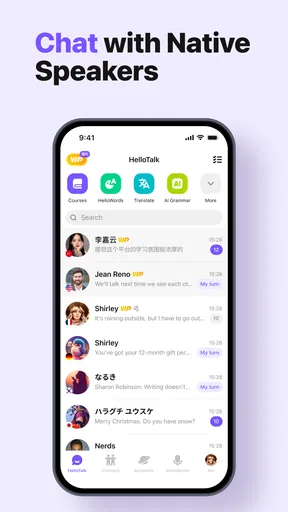
In a chat-based learning app, the main task is easy to understand: read a message, work out what you want to say, and respond. That familiar pattern is less intimidating than a course built around a long sequence of formal lessons. I also like the idea of being able to move between conversation and language help when a sentence leaves me unsure, rather than abandoning the exchange to look up every detail elsewhere.
Still, a conversational screen can become demanding when messages arrive quickly or when a learner is switching between their own language and the one they are studying. I would use short exchanges at first and focus on one question or correction at a time. That gives me room to notice how a phrase is written instead of treating the chat as a stream to catch up with. If I need a carefully ordered syllabus, grammar explanations, and a clear daily checklist, I would pair this kind of practice with a structured course rather than expect a conversation app to provide the same teaching sequence.
Voice, video, and different comfort levels
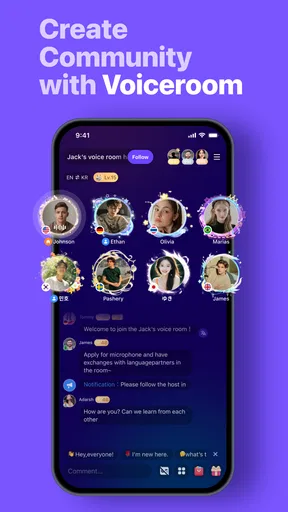
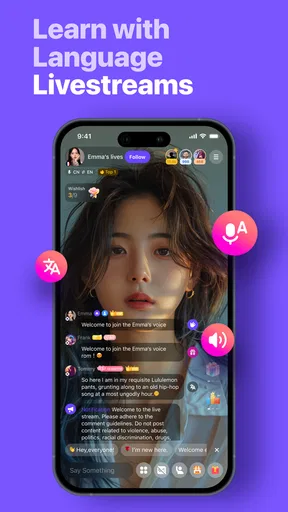
Text is a useful starting point because I can take a moment to compose a reply. Voice messages add a different kind of practice: hearing and producing spoken language helps me notice the gap between recognising a word and saying it comfortably. Live voice or video conversations may suit learners who want spontaneous practice, but they also ask for more confidence and a quieter setting. I would not assume that every learner needs to use every communication mode to benefit.
For someone who finds speaking stressful, a sensible progression is to begin with written messages, then try a brief voice note once the exchange feels friendly. If I am in a shared room, travelling, or simply not ready to speak aloud, text keeps practice possible without drawing attention. Conversely, a learner who needs extensive time to process spoken language may want to keep live conversation occasional and rely more on written exchanges, where the pace is easier to manage.
Learning in the gaps of an ordinary day
HelloTalk is an education app from HelloTalk Learn Languages App, and its social format fits around small pockets of time better than a class that requires everyone to be available at once. I can imagine writing a short reply during a quiet break, then returning later when I have time to think through a correction. That flexibility is useful, but it is not the same as guaranteed, uninterrupted study: another person has their own schedule, and a conversation may pause.
The app is free to start, is rated Teen, and has optional in-app purchases, so I would check the purchase choices before treating every part of the experience as included. Its current version is 6.3.1, and it runs on Android 8.0 or later. I would also keep the social setting in mind: this is practice with other people, not a private workbook. A learner who wants a fully self-paced experience with no need to contact strangers may be happier with a solo learning app.
Worth Reading Before You Choose

Flipboard Shows What News Apps Must Do Beyond the Feed

Switching to Android Auto Means Rethinking Your Driving Routine

Google Calendar Makes a Crowded Week Easier to Manage

Ludo King Makes the Most of the Minutes Between Plans

Baby Panda World Brings Quick Play to Modern Phones, but Its Game Library Feels Busy

ESPN’s Live Game View Makes Following Close Games Easier
Making New Friends Around the Globe
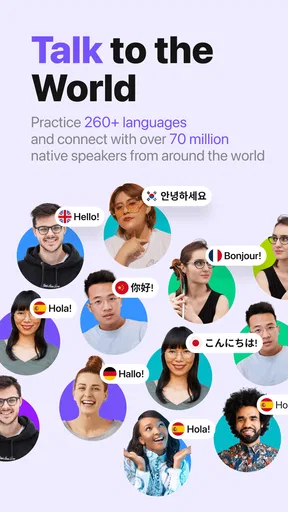
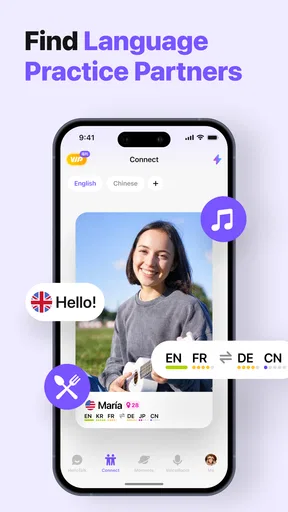
First off, the coolest thing about HelloTalk is how it connects you with native speakers from around the world. Imagine chatting with someone from Tokyo while you’re chilling on your couch in New York. You can text, voice chat, or even do video calls with your new international buddies. It’s like having a pen pal, but way cooler and more interactive. Plus, you get to learn the language in context, picking up slang and idioms that textbooks usually skip over.
Language Exchange Done Right
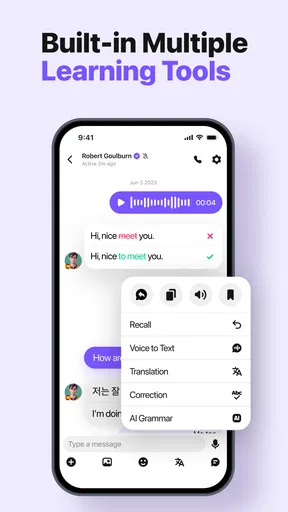
The app is designed for mutual language exchange, so you’re both the student and the teacher. You get to help others learn your native language while they help you with theirs. It’s a win-win! The interface makes it super easy to switch between languages, and you can correct each other's messages with a simple tap. This feature is a game-changer, as it provides instant feedback, which is crucial for mastering any language.
Interactive Tools That Make Learning Fun
What I love about HelloTalk is the range of interactive tools it offers. You can not only text but also send voice messages, which really helps with pronunciation. There's even a translation feature, but use it wisely, my friends. Relying too much on translations can be a crutch, so I recommend using it sparingly to ensure you’re genuinely learning.
"The app opens up a world of linguistic possibilities, bringing cultural exchanges right to your smartphone."
A Safe Space for Learners
Safety is a big concern when it comes to online interactions, and HelloTalk nails it with its privacy controls. You can manage who can contact you and even report users if necessary. It’s comforting to know that the app takes user security seriously, allowing you to focus on learning without unnecessary distractions.
Customizing Your Learning Experience
With over 150 languages to choose from, you can customize your learning journey based on your interests and goals. Whether you want to dabble in Arabic or perfect your French, the app offers a personalized experience. You can set your proficiency level, and the app will match you with speakers who can best help you. It’s like having a personal language tutor 24/7.
Additionally, keywords like 'learn languages', 'language exchange', and 'native speakers' are integral to the app's operation, making it easy to find exactly what you need using these terms.
Making the exchange work in practice
A useful way to begin is to make the first message easy to answer. I would introduce myself briefly, say which language I am practising, and ask one specific question rather than sending a long list of requests. If I am offering help in return, I would make that clear too. This small bit of framing can make the exchange feel more like shared practice and less like asking someone to provide free lessons.
Corrections are most useful when they are manageable. Instead of asking a conversation partner to fix every sentence, I would invite feedback on one recurring issue, such as word order or a phrase that sounds unnatural. Then I could try the corrected form in my next reply. That turns a correction into a habit I can practise, rather than a note I read once and forget. It also helps keep the conversation flowing instead of making every message feel like a test.
Choosing between conversation and a formal course
Compared with a typical self-study language app, this approach gives me a human response and the chance to see how language is used in context. That can be especially helpful when I want to test a phrase, understand a casual expression, or build confidence before a real trip. The trade-off is that a conversation partner is not necessarily a trained teacher, and different people may explain the same point in different ways. I would use a course or reference resource for systematic grammar and rely on HelloTalk for putting that knowledge into practice.
It is also different from a classroom or scheduled tutoring session. I can practise informally without arranging a lesson, but I cannot count on a partner being available at the exact moment I want help. If I have an urgent deadline or need a carefully planned curriculum, a tutor or structured course is the more dependable choice. If my main obstacle is that I rarely use the language outside exercises, an exchange can provide a practical reason to write and listen.
A realistic routine, without turning chat into homework
Imagine I am learning French and have a few minutes during a lunch break. I could read a reply, write a short answer, and use a correction to notice one expression I want to remember. Later, when I have more privacy, I might send a voice message to practise saying a sentence aloud. I would not try to squeeze a full lesson into that break; the point is to keep contact with the language in a manageable way and return when I can concentrate.
For a better chance of steady progress, I would keep a small personal note of useful corrections and phrases, then review it before starting another conversation. That is a practical workaround for the fact that lively chats can move on before I have absorbed everything. I would also set a boundary around when I check messages, so a social learning tool does not become a constant interruption. These habits make the app easier to fit into a day without confusing activity with learning.
Who is likely to get the most from it?
I would recommend trying it if you already know enough to introduce yourself, ask simple questions, and tolerate a few mistakes. Intermediate learners may find the most immediate value in refining everyday phrasing and listening to different ways people express themselves. Beginners can still use it, but I would start with modest goals and keep a separate source for basic explanations. A person who enjoys cultural conversation may also find the exchange motivating, provided they are comfortable interacting with people they do not know.
On the other hand, I would skip it, or use it only as a supplement, if I wanted a quiet app that teaches without social contact, a fixed lesson plan, or guaranteed corrections from an instructor. It may also be a poor fit if writing to strangers feels uncomfortable or if I need every session to be accessible in a particular format. The Teen content rating is a reminder that this is a social environment; younger users should involve a parent or guardian in deciding whether and how to communicate with others.
Practical limits and expectations
The central strength of an exchange is also its main uncertainty: people have different levels of patience, availability, and teaching skill. Some conversations may become useful learning partnerships; others may be brief or not focused on study. I would avoid judging my progress by how many chats I start. A smaller number of respectful, sustained exchanges can be more helpful than many shallow conversations, and it is reasonable to move on if a contact is not a good fit.
There is also a balance to strike with translation. It can help me confirm meaning and keep a conversation moving, but translating every line removes the effort that builds recall. I would first try to understand the message from context, then use translation to check a difficult part, and finally compose a reply without copying a translated sentence wholesale. This three-step habit keeps assistance useful while leaving me responsible for the language I produce.
Language learning with a social rhythm
Released in 2013, the app has an average rating of 3.4 from around 228,000 ratings, with roughly 7,400 written reviews and over 10 million installs. Those figures suggest a sizeable audience, but they do not tell me whether a particular conversation will suit my goals. I would judge the experience by whether I can find a respectful exchange, receive useful feedback, and make practice fit my routine. The free starting point lowers the barrier to trying it, while optional purchases priced from $0.49 to $399.99 per item make it sensible to review the in-app options before spending.
Its value is not that it replaces every other way of learning. Rather, it gives me a human setting for using language, where misunderstandings and small corrections are part of the practice. If I approach it with clear boundaries, a little patience, and a separate plan for structured study when I need one, it can make an otherwise passive learning routine feel more connected to real life.
Wrapping It Up
In a nutshell, HelloTalk is a fantastic tool for anyone serious about learning a new language. It not only enhances your linguistic skills but also broadens your cultural horizons. The app is user-friendly, safe, and offers a plethora of features that make language learning an engaging and enjoyable experience. So, if you’re ready to take your language skills to the next level, give HelloTalk a try. Trust me, it’s a game-changer.
Ready to dive in? You can download HelloTalk on both Android and iOS platforms, and start your language learning adventure today!
Pros
- Wide range of languages available.
- Interactive learning with native speakers.
- User-friendly interface design.
- Voice and text chat options included.
- Language exchange with global community.
Cons
- Some features require premium membership.
- Occasional bugs with chat translations.
- Limited offline functionality.
- Advertisements can be intrusive.
- Privacy concerns with user data sharing.
FAQs for HelloTalk - Learn Languages
What is HelloTalk and how does it work?
HelloTalk is a language learning app that connects you with native speakers from around the world. You can chat via text, voice, and video to practice your target language. The app also includes features like translation, pronunciation correction, and grammar tips to help you improve your skills effectively.
Is HelloTalk free to use, or are there any paid features?
HelloTalk offers a free version with essential features like text and voice chat. However, there is a VIP subscription that provides additional benefits such as unlimited translations, an ad-free experience, and the ability to search for language partners by location or gender. The VIP features enhance your learning experience.
How does HelloTalk ensure user safety and privacy?
HelloTalk prioritizes user safety by implementing community guidelines and a reporting system for inappropriate behavior. Users can control their privacy settings, manage who can contact them, and block or report users if necessary. The app strives to maintain a respectful and secure environment for language learning.
Can I learn multiple languages simultaneously on HelloTalk?
Yes, HelloTalk allows users to learn multiple languages at the same time. You can switch between languages in your profile settings and connect with native speakers for each of your target languages. This flexibility makes it easy to diversify your language learning journey within a single platform.
What kind of support can I expect from the HelloTalk community?
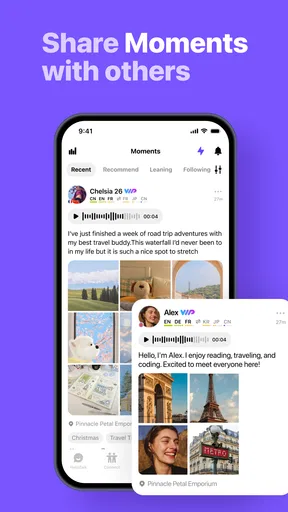
The HelloTalk community is supportive and encourages language exchange through mutual learning. Users can correct each other's messages and offer tips. Additionally, the Moments feature allows you to post questions or updates, receiving feedback from native speakers. The community is an essential resource for practical language practice.


